


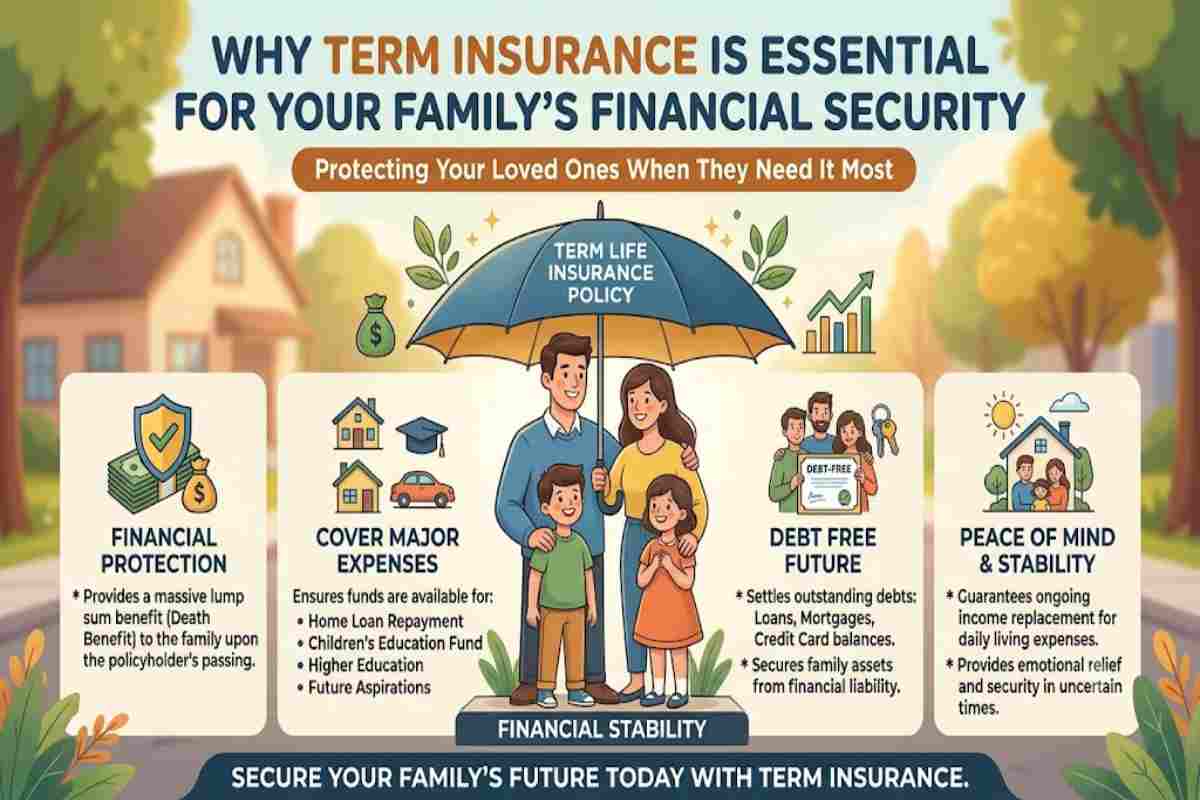
Financial planning is not just about saving money or building wealth. It also involves protecting your family against unexpected circumstances. While investments help achieve long-term goals, life insurance provides financial support when an earning member is no longer around.
One of the simplest ways to secure your loved ones is through term insurance. It offers life coverage for a specified period and provides a death benefit to the nominee if the insured person passes away during the policy term. Understanding its importance, benefits, and features can help individuals make informed financial decisions.
What Is Term Insurance and How Does It Work?
Term insurance is a life insurance product designed primarily to provide financial protection.
The policyholder selects a coverage amount, policy duration, and premium payment option. In exchange for the premiums paid, the insurer provides life coverage according to the policy’s terms.
For example, if an individual purchases a ₹1 crore term plan for 25 years and passes away during the coverage period, the nominee may receive the applicable death benefit.
However, standard pure-term plans generally do not provide maturity benefits if the insured person survives the policy duration.
Why Should You Consider Term Insurance?
Term insurance can help protect families from financial difficulties following the unexpected loss of an earning member.
1. Income Replacement
Families often depend on regular income to manage household expenses, education costs, and everyday financial commitments.
A term insurance payout can provide financial support and help dependants maintain their standard of living.
2. Protection Against Financial Liabilities
Outstanding home loans, personal loans, and other debts can create financial pressure on surviving family members.
Adequate life coverage may help repay these liabilities without requiring the family to liquidate important assets.
3. Support for Long-Term Goals
Children’s education, marriage expenses, and retirement planning require substantial financial resources.
Term insurance proceeds can help families continue working towards these goals despite unexpected circumstances.
4. Affordable Financial Protection
Pure-term plans generally offer higher life coverage at comparatively lower premiums than insurance products combining protection with savings.
This makes them suitable for individuals seeking substantial financial protection within a manageable budget.
What Factors Affect Term Insurance Premiums?
The premium payable depends on several factors.
Age: Younger applicants generally receive lower premiums because their mortality risk is typically lower.
Health: Existing medical conditions, medical history, and health assessment results can influence pricing.
Lifestyle: Smoking and tobacco consumption may result in higher premiums.
Coverage Amount: Higher sums assured generally increase the premium.
Policy Duration: Longer coverage periods may affect the overall premium calculation.
Additional Benefits: Optional riders can increase premiums depending on the protection selected.
Understanding these factors helps applicants compare policies more effectively.
How Much Term Insurance Coverage Do You Need?
Selecting the right sum assured is essential for meaningful financial protection.
Start by estimating your family’s annual expenses, outstanding liabilities, and future financial commitments.
Consider the number of dependents, children’s education requirements, and the financial support your family may need over several years.
Existing savings, investments, and insurance coverage should also be included in the assessment.
Inflation is another important consideration because living expenses generally increase over time.
The appropriate coverage amount should reflect your family’s financial circumstances rather than an arbitrary figure.
Important Things to Check Before Buying Term Insurance
Before you buy term insurance, compare available policies based on coverage, affordability, and policy conditions.
Review the insurer’s claim settlement information, available premium payment options, and policy exclusions.
Check whether the coverage duration aligns with your major financial responsibilities.
Optional riders, such as critical illness or accidental death benefits, should be evaluated according to individual needs.
It is equally important to disclose medical history, occupation, and lifestyle habits accurately during the application process.
Incorrect or incomplete information can create complications during underwriting or claim assessment.
When Is the Right Time to Purchase Term Insurance?
Purchasing life insurance earlier can be beneficial because younger individuals generally qualify for more affordable premiums.
However, the appropriate time depends on personal circumstances and financial responsibilities.
Individuals who have dependants, outstanding loans, or significant future commitments should consider evaluating their life insurance requirements.
Coverage should also be reviewed after important life events such as marriage, childbirth, or purchasing a home.
Conclusion
Term insurance plays an important role in protecting families against the financial consequences of losing an earning member.
It can provide income replacement, support outstanding liabilities, and help dependants pursue long-term financial goals.
By evaluating coverage requirements, comparing policy features, and understanding premium factors, individuals can select suitable financial protection.
A well-chosen term plan helps ensure that loved ones have financial support when they need it most.