

Every big cricket season brings two kinds of traffic. One is the genuine surge of fans following scores, joining fantasy leagues and arguing in family group chats. The other follows close behind: scammers who know that excited people make quick decisions, and that a huge share of cricket conversation in India now happens on WhatsApp.
The scams themselves are not especially clever. What makes them work is timing, familiarity and a handful of predictable psychological shortcuts. Once you can recognise the playbook, most of it falls apart.
Why WhatsApp Suits Scammers So Well
WhatsApp has a few properties that make fraud easier. Anyone with your number can message you. Display names and profile photos can be set to anything, so a stranger can look exactly like a brand, a bank or a friend. Chats feel private and personal, which lowers people’s guard. And end-to-end encryption, a genuine privacy protection for ordinary users, also means the platform cannot read messages to spot a scam in progress.
Scammers then add their own ingredient: urgency tied to live cricket. “Offer closes before the toss.” “Withdrawals shut after the match.” “Only ten places left in tonight’s group.” The match clock becomes a pressure tool, and pressure is what stops people checking.
The Five Plays You’ll See Most Often
1. The cloned number
A scammer copies the name, logo and profile picture of a well-known service and starts messaging people from a different number. Sometimes they target people who have mentioned that service publicly. Sometimes they simply work through leaked contact lists.
The conversation looks identical to the real thing. The giveaway is the number itself, which differs from the one the business actually uses, often by a digit or two, or carries an unexpected country code.
2. The fake payment screenshot
In this version the scammer is the one “paying”. They send you a screenshot of a UPI transfer for a resold match ticket, a fantasy contest prize or something you listed for sale, then claim they sent too much by mistake. Could you return the difference?
The screenshot is edited or generated, and no money ever arrived. A screenshot proves nothing at all. Only your own bank app or statement can tell you whether money has landed.
3. The withdrawal fee
This one targets people who believe money is waiting for them somewhere: winnings in a tipping group, a bonus balance, a refund. They are told the amount is ready but cannot be released until they pay a processing charge, a “tax clearance” fee or a verification deposit. Once that is paid, a second fee appears, and then a third.
Legitimate services deduct genuine charges from the amount being paid out. They do not ask you to send new money so that you can receive old money.
4. The cloned website
A link arrives leading to a login page that looks exactly like a real platform. The web address is slightly off: an extra letter, a hyphen, a different ending. Whatever you type goes straight to the scammer, who uses it within minutes.
These links are often pushed through groups promising “insider” predictions or secret information about upcoming matches. That promise alone should be enough to close the chat.
5. The OTP and UPI PIN request
Most of these scripts eventually reach the same moment. The scammer needs a one-time password, your UPI PIN, or for you to install a screen-sharing app “so support can fix the issue”. Any one of those gives them direct access to your money.
No genuine service needs your UPI PIN in order to send you money. No support agent needs to see your phone screen to process a withdrawal. The moment either request appears, the conversation is over.
Why Sensible People Still Fall for It
It is easy to read a list like this and assume only careless people get caught. Anyone who has helped a friend or relative after a scam will tell you otherwise. Careful, well-educated people are caught all the time.
The reason is that these scripts don’t attack intelligence. They attack attention. A message that arrives during a last-over finish, from a name you recognise, about money you believe is yours, gets a fraction of the scrutiny you would give the same message on a quiet afternoon. Scammers also borrow small true details, such as the name of a real platform or the score of a match that is actually being played, which makes the rest of the story feel plausible.
Then there is the sunk-cost trap. Once someone has paid a first “fee”, paying a second one feels like protecting the money already spent. Each payment makes the next easier to justify, which is why the withdrawal-fee scam so often runs to three or four rounds before the victim finally stops.
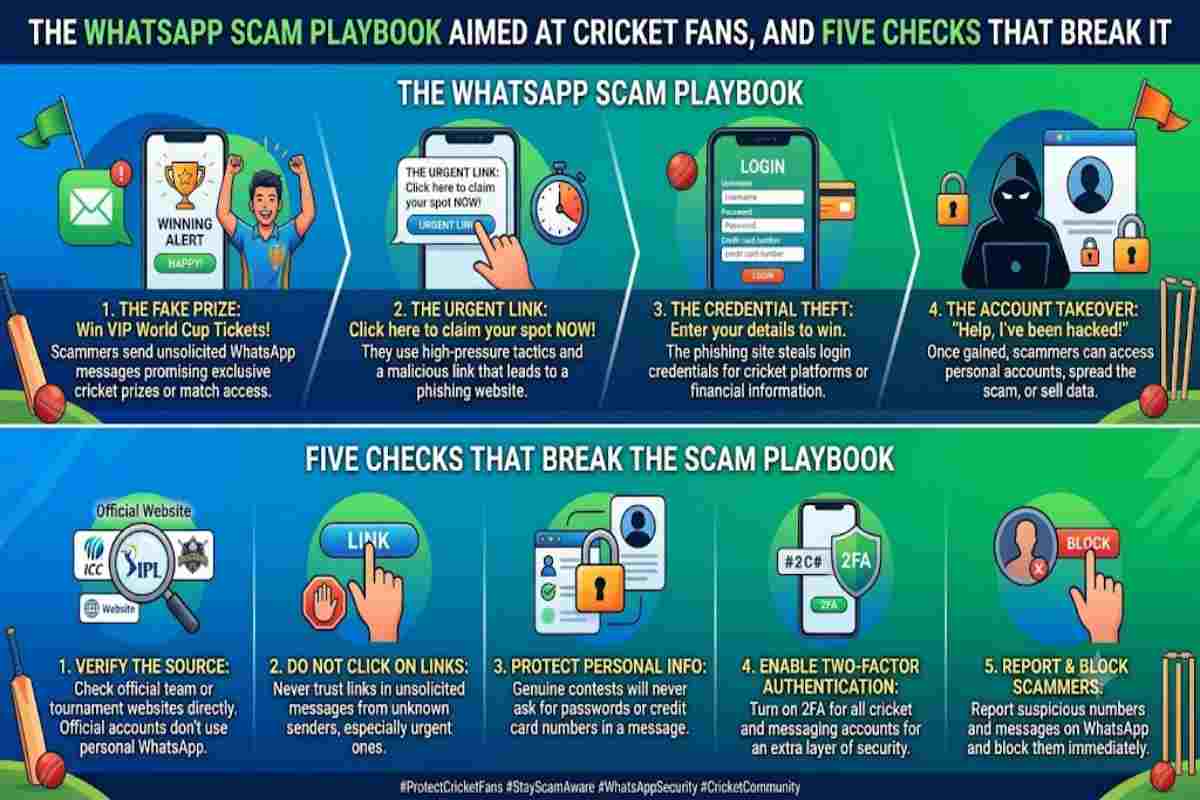
Five Checks That Break the Playbook
You don’t need a long course in cybersecurity. You need a few fixed habits that don’t bend under match-night pressure.
Check 1: Verify the number at the source, not in the chat. Before trusting any WhatsApp number that claims to represent a business, go to that business’s official website and compare the two. Established services publish their contact details on their own domain. CricketOnlineID, for instance, lists its official WhatsApp number on its website so that anyone can cross-check a message against it. If a number is not listed anywhere you can reach independently, treat it as unverified.
Check 2: Trust your bank app, never an image. Any claim that money has been sent should be confirmed in your own banking app. If the credit isn’t there, the money hasn’t arrived, whatever the screenshot shows.
Check 3: Never pay to get paid. A fee, tax or deposit demanded before a withdrawal or refund is released is the clearest fraud signal there is. Walk away the first time it comes up.
Check 4: Keep credentials to yourself. OTPs, UPI PINs, passwords and screen-sharing access are never shared, whatever reason is given. Switch on WhatsApp’s two-step verification as well, so nobody can take over your account with an OTP they tricked out of you.
Check 5: Slow the match clock down. Scams run on urgency. Decide in advance that you won’t send money or share details during a live match. If an offer is real, it will still be real tomorrow morning.
Settings Worth Switching On Today
A few WhatsApp features reduce how many scam messages reach you in the first place:
- Two-step verification (Settings, then Account) adds a PIN that is required whenever your number is registered on a new phone.
- Silence unknown callers (Settings, then Privacy, then Calls) sends calls from numbers outside your contacts straight to the call log.
- Group privacy (Settings, then Privacy, then Groups) stops strangers from adding you to “tips” and “offers” groups.
- Profile photo and About visibility limited to your contacts makes it harder for scammers to build a picture of you.
Menu names shift slightly between app versions, but each of these lives under Account or Privacy.
Protecting the Less Tech-Savvy People in Your Life
Some of the most targeted people are the ones least likely to read an article like this: parents who have only recently started using UPI, younger siblings with their first smartphone, relatives who accept every invitation to every cricket group.
A ten-minute conversation does more than any forwarded warning. Sit with them, find two-step verification in WhatsApp and switch it on together. Agree a simple family rule that nobody sends money or shares an OTP because of a message without first calling someone they trust. Save the 1930 helpline in their contacts. And make it clear they will never be scolded for asking, because embarrassment is what keeps people quiet until it is too late.
If You’ve Already Been Caught
Move quickly. The first few hours matter most, because stolen money is usually split up and moved on fast.
- Call 1930, the national cybercrime helpline, or file a complaint at cybercrime.gov.in. Reporting early improves the chances of stopping money while it is still in transit.
- Call your bank and ask them to block the card, UPI ID or account involved.
- Report and block the number from inside the WhatsApp chat.
- Report the fraudulent message through the Chakshu facility on the government’s Sanchar Saathi portal, which was set up for exactly this kind of communication.
- Save everything: the chat, the number, screenshots, transaction IDs and links. Don’t delete the conversation, however embarrassing it feels.
Plenty of people never report because they feel foolish. Scammers depend on that silence. These operations target thousands of people at a time, and the details in one report can help stop the next attempt.
The Pattern Behind All of It
Strip away the cricket branding and every play in this article follows the same steps. Create urgency. Borrow trust from something familiar. Move the victim away from official channels. Ask for money or credentials.
Break any single step and the scam usually collapses. Check numbers against official websites; the more careful providers now publish guidance on verifying their official numbers for precisely this reason. Confirm payments in your own bank app. Refuse to pay fees to release money. And give yourself permission to say, “I’ll look at this after the match.” The people on the other end are counting on you not to.
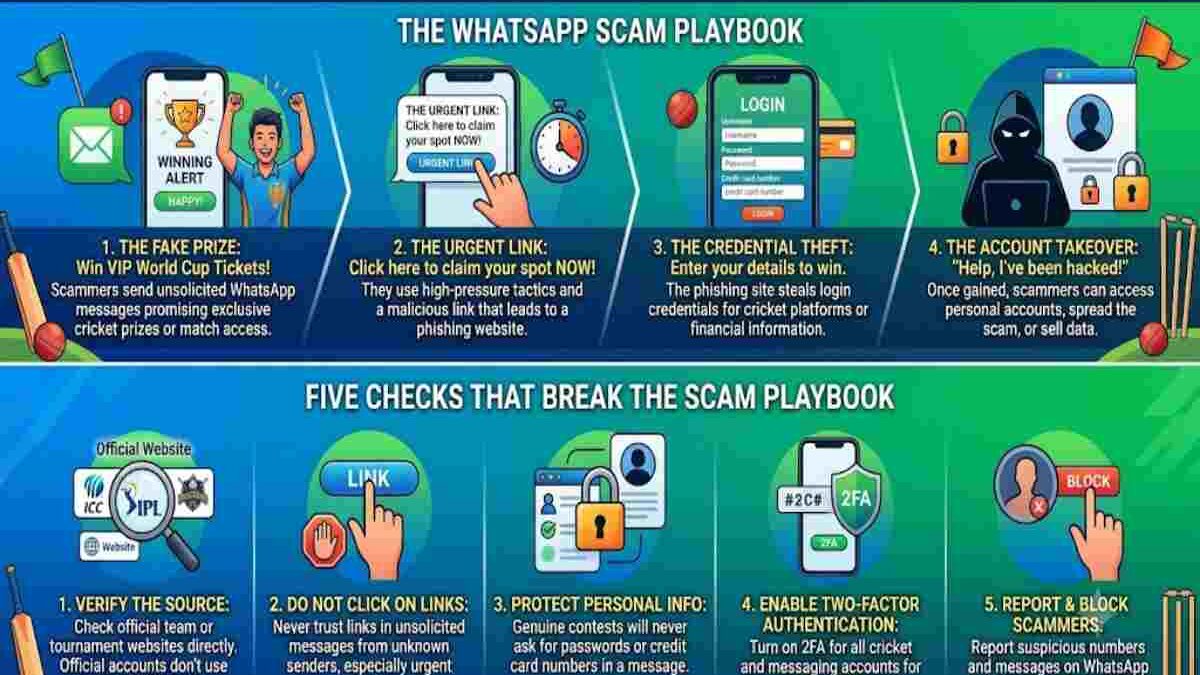
The WhatsApp Scam Playbook Aimed at Cricket Fans, and Five Checks That Break It