
It’s 7:45 a.m. The scheduler’s already fielding calls. A caregiver is texting about client preferences. A care manager is trying to track down a missing clinical document. Somewhere, someone is trying to reconcile payroll.
Welcome to private duty home health. Beautiful work. Complex logistics.
If there’s one thing agency leaders learn fast, it’s this: good intentions don’t scale without the right tools. And that’s exactly why modern private duty home health software isn’t optional anymore. It’s mission-critical.
But with so many platforms out there, how do you know what features actually matter? Which ones improve care delivery? Which ones protect your margins? Which ones help your team breathe instead of scramble?
Here’s your practical guide.
-
Real-Time Scheduling That Actually Works
Let’s start with the obvious problem: schedules that shift faster than tide changes.
Private duty care is dynamic. Clients call for changes. Caregivers call in sick. New visits are added mid-week. Routes need adjustments by lunch.
If your software doesn’t handle that in real time, you’re managing chaos, not care.
Look for:
– Automated schedule optimization
– Skill-based matching (client needs to caregiver skills)
– Notifications on changes
– Conflict alerts
– Geographically sensible routing
This isn’t a nicety—it’s the foundation of reliable care delivery and caregiver satisfaction.
A happy caregiver is more likely to show up on time with a smile.
Just saying.
-
Mobile Access for Care Teams in the Field
Let’s be honest: private duty isn’t office work. It happens in homes, neighborhoods, and communities.
That means caregivers need tools that travel with them.
Great private duty home health software offers secure mobile apps where teams can:
- Clock in and out
- Access client care plans
- Document visit notes
- Capture signatures
- Receive schedule updates
- Communicate with coordinators
No paper handoffs. No post-shift transcription marathons.
Documentation is accurate because it’s immediate. And that equals better compliance and happier clients.
(Also: caregivers like not having to juggle clipboard chaos.)
-
Integrated Clinical Documentation That Saves Time
Documentation isn’t optional. But it can be easier.
Your software should simplify clinical workflows by:
- Pre-populating client information
- Offering customizable note templates
- Supporting voice-to-text where appropriate
- Making documentation mobile-friendly
- Syncing instantly with the central system
When documentation flows, you avoid:
– Delays in billing
– Compliance gaps
– Mistakes due to late entry
– Confusion on care direction
It’s efficiency—and accuracy—wrapped into one.
-
Billing and Claims Integration That Actually Feels Like Integration
Let’s talk money.
Nothing slows an agency down like billing friction. When documentation, visit verification, and billing systems don’t communicate, you end up with:
- Denied claims
- Manual reconciliation
- Rework
- Frustrated billing staff
Private duty home health software should link documentation to billing effortlessly.
Automatic EVV validation.
Real-time claims readiness checks.
Seamless transitions from visit completion to invoicing.
That means fewer surprises and healthier cash flow.
And yes—that’s a big deal.
-
Built-In Compliance and Audit Readiness
Healthcare regulations aren’t static. They evolve. And every agency is accountable.
Software should help you stay ahead, not chase behind.
Look for features like:
– Automated compliance reminders
– Audit-ready documentation
– Electronic visit verification (EVV)
– Credential tracking
– Time-stamped records
When compliance isn’t a scramble at month’s end, your team can focus on care delivery—not paperwork panic.
Dreamy? Maybe. Necessary? Absolutely.
-
Analytics and Reporting That Drive Decisions
Data isn’t valuable until it helps you do something.
Your software should provide dashboards and insights that show:
- Visit completion trends
- Caregiver productivity
- Overtime patterns
- Billing and reimbursement performance
- Client outcomes
You shouldn’t have to export spreadsheets or chase reports. You should be able to see operational strength—and where improvement is needed—at a glance.
Insightful reporting transforms leadership from reactive to strategic.
That’s powerful.
-
Communication Tools That Keep Everyone Aligned
Care coordination can’t happen through scattered text threads and email chains.
Great private duty home health software centralizes communication so that:
- Coordinators can message caregivers within the system
- Alerts and updates reach teams instantly
- Client notes are shared securely and in context
That means fewer “Did you see my text?” moments—and more clarity across your team.
Wrap-Up: What Really Matters
Private duty isn’t simple. But your software should make it feel simpler.
The right features aren’t flashy. They’re functional.
They reduce friction.
They tighten operations.
They protect revenue.
They improve care delivery.
And they give your team time back—time they can spend doing what matters most.
Because care delivery should feel seamless—not stressful.
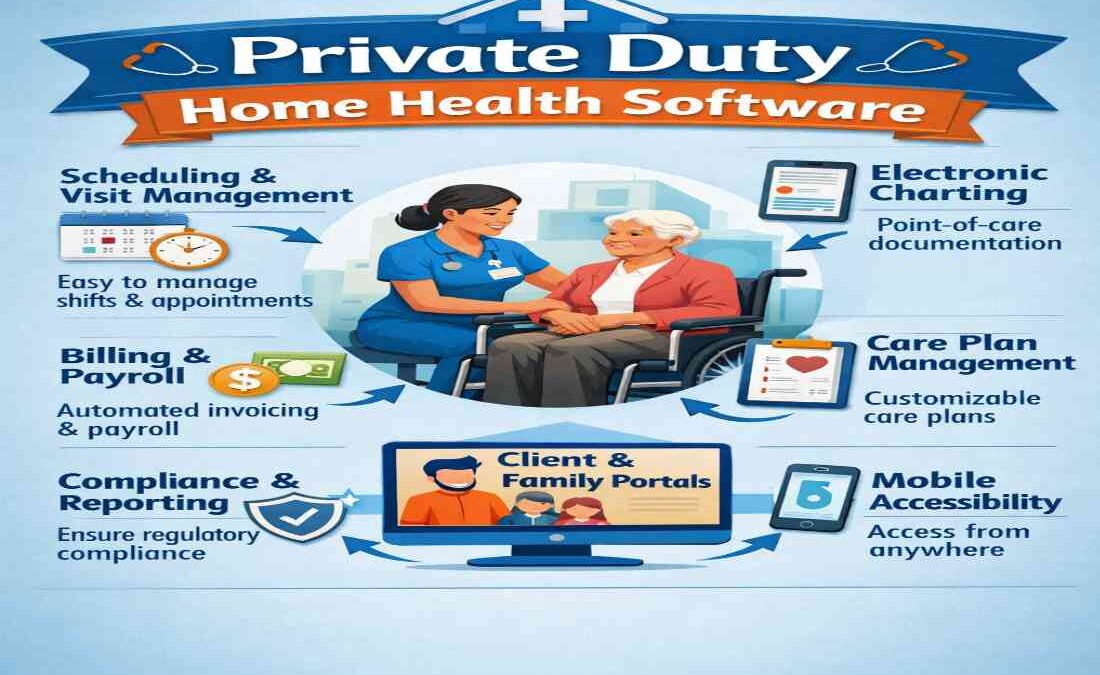
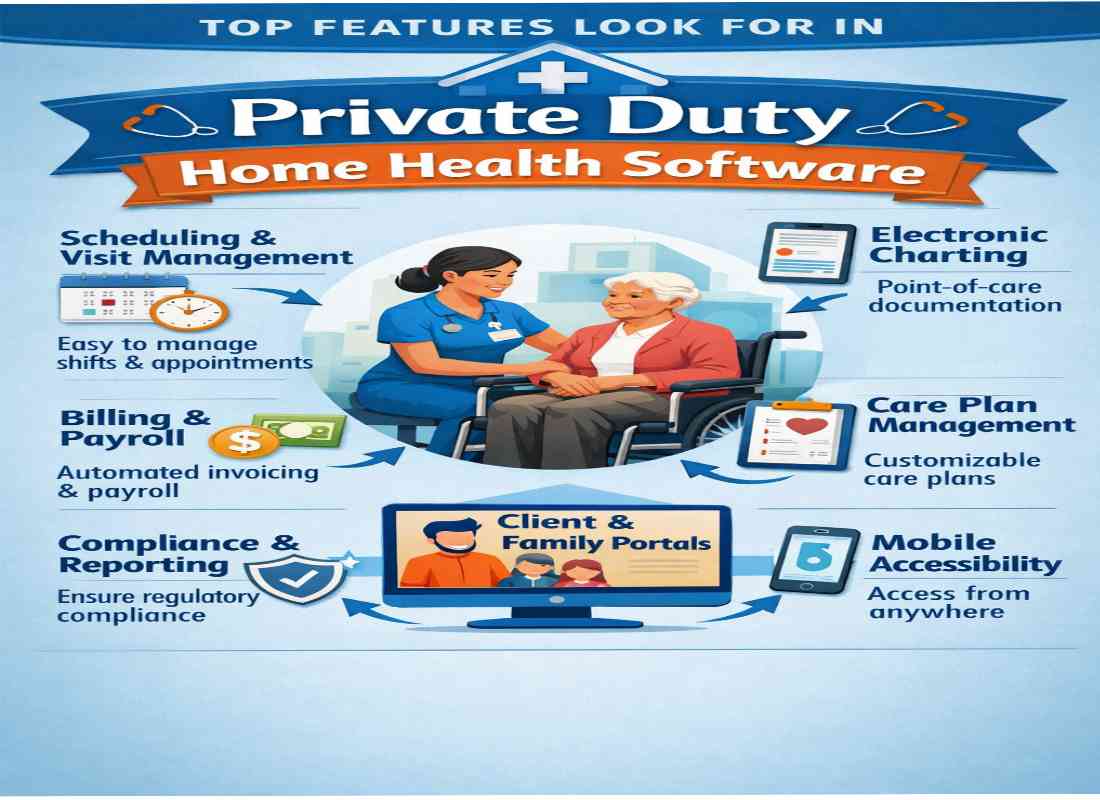
Top Features To Look For In Private Duty Home Health Software