

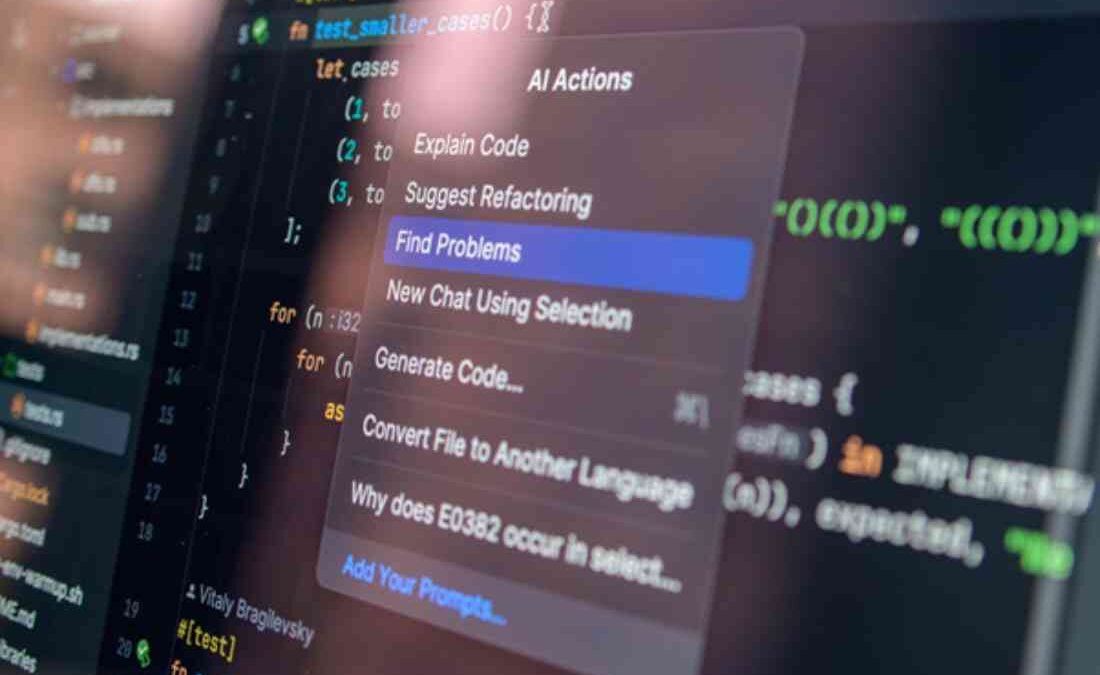
Welcome to 2026, where the “Hello World” is generated in 0.4 seconds and your technical debt is growing faster than your GitHub contribution graph.
If you’re a developer today, you’ve probably never felt more powerful. You have an AI “pair programmer” that doesn’t smell like stale coffee, doesn’t judge your variable names, and can spit out a fully functional Web API before you’ve even finished your morning porridge.
It’s amazing. It’s efficient. And it’s making you absolutely terrible at your job.
We’ve officially entered the era of the “Tab-Tab-Done” Developer. We’re shipping more code than at any point in human history, but we’re building on a foundation of AI-generated spaghetti that will be someone’s 3:00 AM nightmare in about six months.
Let’s talk about why your AI assistant is the best thing that ever happened to your speed, and the worst thing that ever happened to your career.
1. AI Doesn’t Have to Maintain Your Code (But You Do)
The biggest lie of 2026 is that “coding is dead.” Coding isn’t dead; it’s just become suspiciously easy. The problem is that Engineering is harder than ever.
When you ask an AI to write a complex service, it looks at billions of tokens and predicts the most likely next character. It doesn’t care about your specific architectural constraints. It doesn’t know that your company’s legacy database hates nested joins. It certainly doesn’t know that the “quick fix” it just suggested is going to create a memory leak that only triggers when the moon is full and the traffic is high.
AI doesn’t feel the pain of a production outage. It doesn’t have to explain to a CTO why the system is down. It just provides a “confident” solution and waits for you to hit Tab.
If you are just a “Reviewer of AI Suggestions,” you aren’t an engineer. You’re a middle manager for a bot. And eventually, the bot won’t need the middle manager.
2. The Death of the Documentation (And Your Brain)
Remember documentation? Those long, boring pages of text that explain why something works? In 2026, reading documentation has become a “vintage” hobby, like collecting vinyl or using a manual toothbrush.
Most juniors today don’t read the docs. They ask the bot to “summarize the docs.”
This is the equivalent of trying to learn a language by only reading the subtitles of a movie. You get the gist, but you miss the grammar, the nuance, and the “why.” When you bypass the struggle of understanding a framework, you bypass the learning.
If the AI makes a mistake (and it will), a developer who has read the documentation can spot the hallucination. A developer who relies on the summary is just a passenger on a ship with a blind captain.
3. ‘Confidently Wrong’ Is the New Industry Standard
LLMs are designed to be helpful, not necessarily right. They have no “I’m not sure” button. If you ask a 2026 AI model to use a library that doesn’t exist, it will simply invent the syntax for you with such confidence that you’ll start questioning your own sanity.
We are seeing a massive influx of AI-generated spaghetti: code that looks like it follows SOLID principles but is actually just a hallucinated mess of “plausible-looking” logic.
- Shadow Dependencies: AI loves to pull in random packages to solve simple problems.
- Over-Engineering: Why use a simple if statement when the AI can suggest a Strategy Pattern that requires six new classes?
- The “Voodoo” Fix: “I don’t know why the AI suggested this, but the red line went away, so I’m moving on.”
This is how systems die. One “voodoo” fix at a time.
4. Seniority is About What You Delete, Not What You Write
If you want to know if someone is a Senior Engineer in 2026, look at their PRs.
- The Junior: +2,500 lines (all generated by AI in ten minutes).
- The Senior: -500 lines (deleted the AI’s unnecessary abstractions and replaced them with a single, well-placed interface).
Real seniority is about Architectural Discipline. It’s about knowing that just because you can generate a microservice in three seconds doesn’t mean you should.
The AI is a generator. An engineer is a filter. If your filter is broken because you’ve become too reliant on the generator, your value to a company is exactly zero. Companies don’t pay senior salaries for “Fast Typing”; they pay for “Correct Deciding.”
5. How to Save Your Career from the AI Abyss
Does this mean you should delete your AI assistant and go back to a mechanical keyboard and a physical copy of C# in a Nutshell? No. That’s just as stupid as the “Tab-Tab-Done” approach.
The real pros in 2026 are those who use AI as a Junior Intern, not as a Senior Architect.
You should be the one setting the constraints. You should be the one defining the interfaces. You should be the one saying, “Actually, that suggestion is garbage; do it this way instead.”
To do that, you need to actually know your craft. You need to know the architecture, the patterns, and the “why” behind every line of code. You need to go beyond the “Tab” key.
Stop Being a Bot-Sitter
If you feel like you’re losing your edge, it’s time to start mastering the “human” side of engineering. We’ve put together a zero-fluff guide on Making the Most Out of Your Coding AI Assistant. It’s not about how to prompt better; it’s about maintaining your Engineering Integrity in a world of automated garbage.
Don’t Be a Prompt Monkey
The AI is making you faster. It’s helping you clear tickets. It’s helping you look productive. But it’s also slowly eroding the very skills that make you valuable in the long run.
Ten years ago, we used to say “Software is eating the world.” In 2026, “AI is eating the Software Engineer.”
Don’t let it happen to you. Read the docs. Understand the architecture. And for the love of everything holy, stop hitting Tab before you’ve actually read the code.