

Introduction
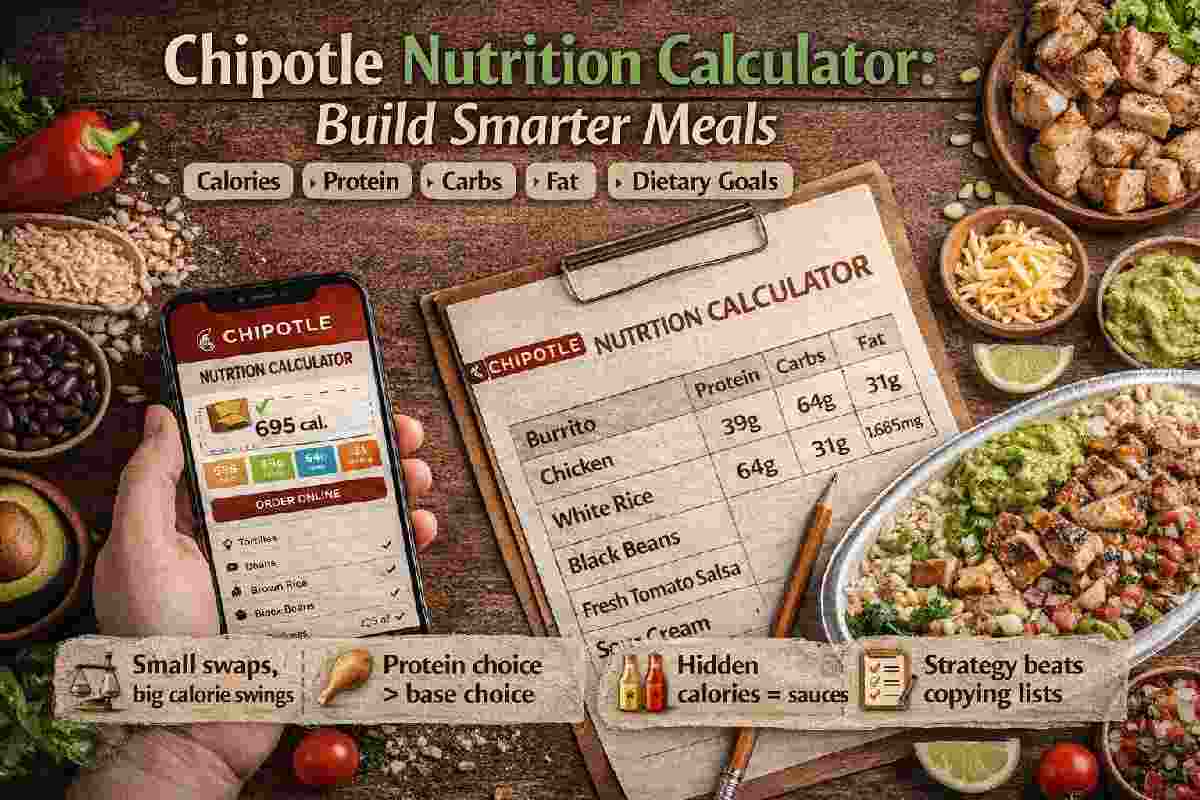
The Chipotle nutrition calculator is most useful when treated as a planning tool, not a calorie counter. Understanding ingredient trade-offs leads to better, repeatable meal choices.
Many people open the calculator expecting a simple answer: Is this meal healthy or not? The problem is that Chipotle meals are modular. One extra scoop or sauce can swing calories by hundreds. That’s why blindly copying “healthy bowls” often fails.
The solution is to use the calculator strategically—by understanding how ingredients interact.
Key Takeaways
-
Calories rise fastest from sauces and cheese
-
Protein choice impacts satiety more than rice choice
-
The calculator uses averages, not real-time portions
-
Strategy matters more than “low-cal” labels
-
Repeatable meals beat one-off “perfect bowls”
What Is the Chipotle Nutrition Calculator?
The calculator is an official tool from Chipotle Mexican Grill that lets users build a meal and view estimated calories, macros, and allergens.
Important limitation:
The numbers are estimates, based on standardized portions—not what a specific employee serves.
How the Calculator Actually Works
The calculator adds:
-
Base calories (rice, beans)
-
Protein calories
-
Toppings and sauces
Problem: People assume each choice is minor.
Agitation: Multiple “small” additions stack fast.
Solution: Prioritize high-impact ingredients first (protein, sauces).
Goal-Based Ways to Use the Calculator
Weight Loss Focus
-
Single rice portion or none
-
Lean protein
-
Skip creamy sauces
Muscle Gain / High Protein
-
Double protein
-
Keep fats moderate
-
Add beans for carbs + fiber
Balanced Everyday Meal
-
One carb base
-
One protein
-
1–2 toppings max
Ingredient Impact Framework
| Ingredient Group | Impact Level | Why It Matters |
|---|---|---|
| Sauces & cheese | Very high | Calorie dense |
| Protein | High | Satiety & macros |
| Rice & beans | Medium | Carb quality |
| Veggies | Low | Volume & fiber |
Common Mistakes People Make
-
Copying influencer bowls without adjustment
-
Assuming “brown rice = low calorie”
-
Ignoring sodium totals
-
Treating calculator numbers as exact
For nutrition accuracy standards, organizations like the FDA and USDA note that restaurant nutrition data is inherently averaged.
Country & Brand Nutrition Transparency Comparison
Competitive Table: Countries & Fast-Casual Brands
| Country | Brand | Nutrition Calculator | Pricing Tier | Transparency Level |
|---|---|---|---|---|
| USA | Chipotle | Yes | $$ | High |
| USA | Sweetgreen | Yes | $$$ | High |
| UK | Pret A Manger | Partial | $$$ | Medium |
| Canada | Freshii | Yes | $$ | Medium |
| Australia | Guzman y Gomez | Limited | $$ | Low |
Pricing tiers are relative.
Yearly Trend: Nutrition Transparency (Qualitative)
| Year Range | Trend |
|---|---|
| 2015–2018 | Basic calorie disclosure |
| 2019–2021 | Full macro calculators |
| 2022–Present | Allergen + lifestyle filters |
Who This Article Is (and Isn’t) For
For:
-
Calorie trackers
-
Fitness-focused eaters
-
People with dietary restrictions
Not for:
-
Medical nutrition therapy
-
Diagnosed dietary conditions (consult professionals)
Trust & Methodology Note
This article is based on:
-
Official calculator behavior
-
Public menu disclosures
-
Nutrition labeling standards used in the US and EU
FAQs
Is the Chipotle nutrition calculator accurate?
It’s accurate at an average level. Real portions may vary slightly.
Can I trust it for weight loss?
Yes, if you use it consistently and focus on trends, not single meals.
Does Chipotle adjust nutrition by country?
Yes. Labeling rules differ between the US, Canada, and Europe.
What adds the most calories at Chipotle?
Cheese, sour cream, and creamy sauces.
Is brown rice healthier than white rice at Chipotle?
Nutritionally similar. Fiber difference is modest.
Can the calculator help with macros?
Yes. It’s especially useful for protein planning.
Does double protein double calories?
Almost. Protein portions are a major calorie driver.
Is Chipotle considered healthy fast food?
It can be, depending on ingredient choices.
Are vegetarian bowls lower calorie?
Not always. Cheese and sauces can outweigh meat calories.
Should I track sodium too?
Yes. Sodium can be high even in low-calorie bowls.
Conclusion
The Chipotle nutrition calculator is most powerful when you use it as a planning tool, not a scorecard. It doesn’t tell you whether a meal is “good” or “bad”—it shows how your ingredient choices add up. Once you understand which items drive calories, protein, fat, and sodium, you can build meals that consistently match your goals instead of guessing each time you order.
Rather than copying preset bowls or chasing the lowest calorie number, the smarter approach is repeatability. Use the calculator to design one or two go-to meals that fit your lifestyle—whether that’s weight management, muscle gain, or balanced eating—and you’ll get far more value than treating it as a one-off nutrition check.
