

Introduction
The manufacturing sector is evolving to become increasingly connected, smart, and data-driven. Today’s modern plants are no longer solely reliant upon machines and conventional production techniques. There are various technologies like artificial intelligence, IIoT (Industrial Internet of Things), robotics, automation, cloud computing, and data analytics that affect manufacturing operations.
Transformation brings both challenges and opportunities for professionals. Old manufacturing know-how is still valuable, although in some cases it has to be complemented by other skills related to technology. The Smart Manufacturing Course can assist professionals in adapting to changes and acquiring capabilities that will allow them to make an impact on current manufacturing processes.
A career in such an environment is not just about acquiring more knowledge and technology. It is about knowing how all these factors can be combined for creating intelligent manufacturing environments.
Why Are Smart Manufacturing Skills Important?
Smart manufacturing involves linking up the production process with technological and data-related aspects. The machines themselves can provide information regarding the performance, status of the equipment, quality, and efficiency of operations.
It transforms the job description for manufacturers. In addition to managing their systems, they would have to be able to analyze information, work with technology-related tools and technologies, and assist in making decisions related to technology.
A smart manufacturing online course can help working professionals develop this broader perspective while understanding how digital technologies fit into manufacturing environments.
Key Skills Required for a Career in Smart Manufacturing
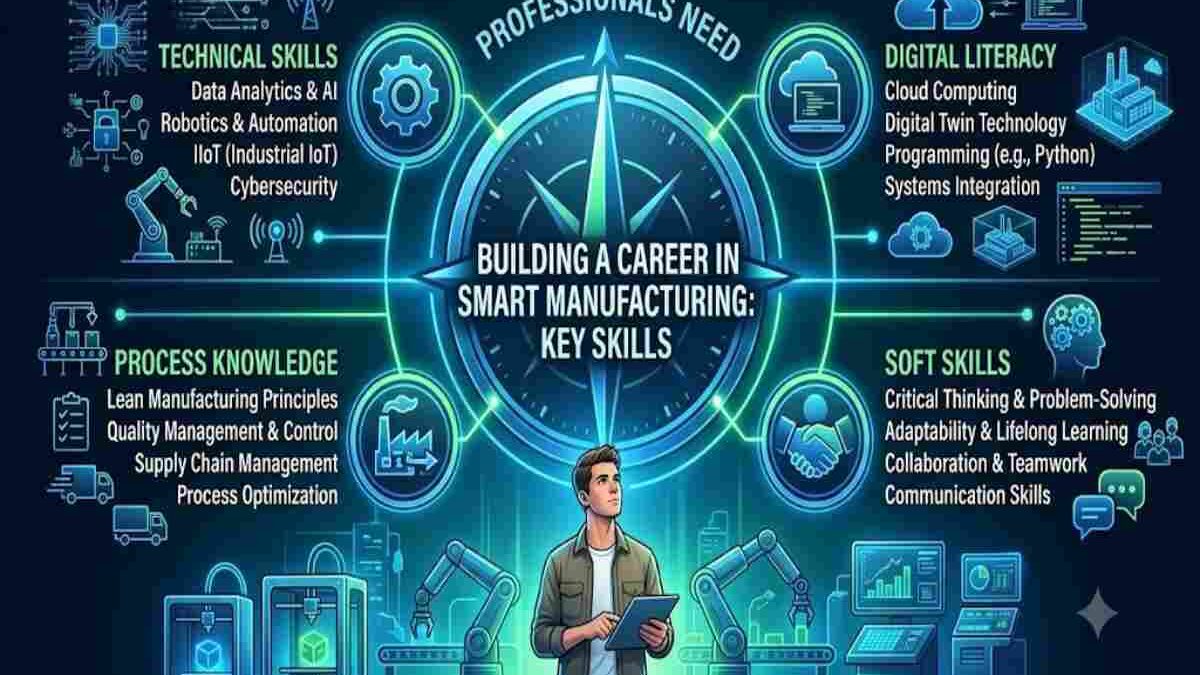
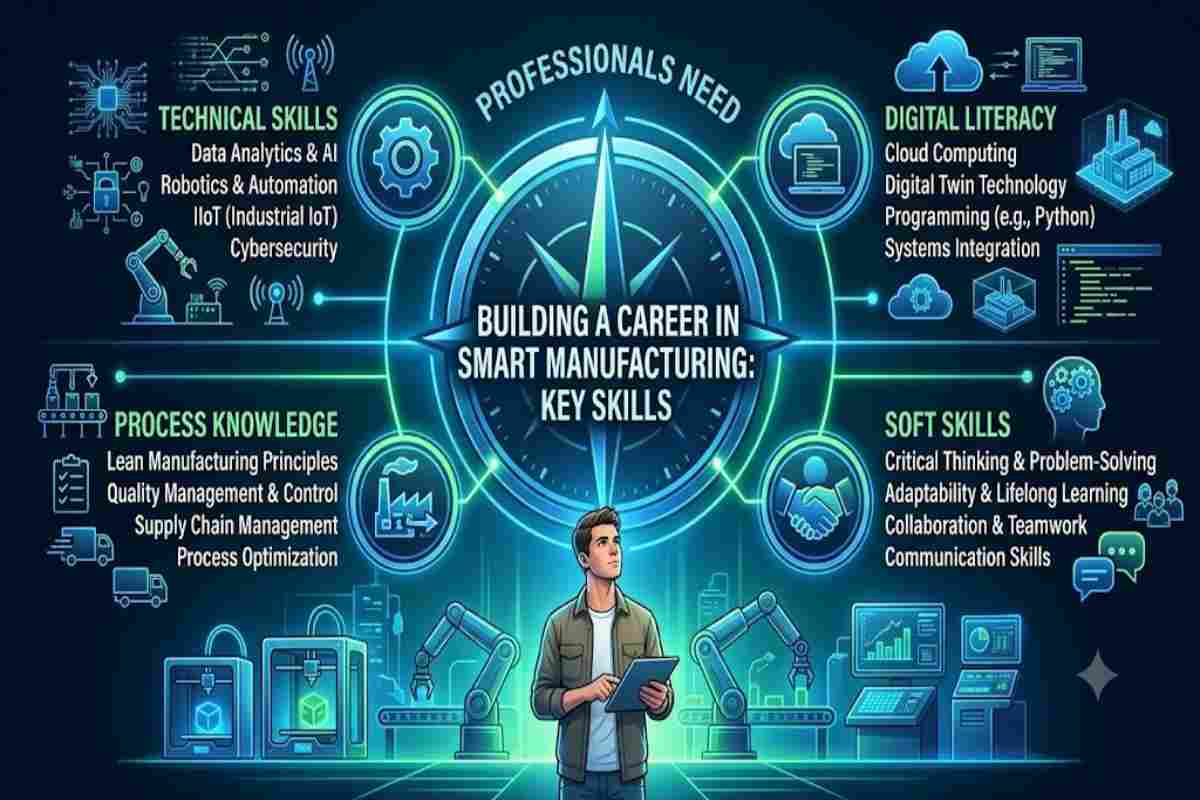
Professionals looking to grow in smart manufacturing should focus on a combination of manufacturing, technology, analytical, and managerial capabilities.
• Industrial Internet of Things
Industrial Internet of Things is an important part of connected manufacturing. It enables machines, sensors, and industrial systems to generate and exchange information.
For professionals to understand how these connected devices could aid in monitoring equipment, knowing about production environments and visibility within manufacturing, professionals must be educated about the connectivity in industry and how this makes machines a component of digital manufacturing.
• Artificial Intelligence and Machine Learning
AI is becoming more and more important in manufacturing due to increasing need for more effective information processing and decision making.
Professionals are not expected to become experts in AI, but they must understand the role that AI and machine learning could play in such fields as process optimization, quality control, production planning, and equipment monitoring.
Developing AI awareness can make it easier to communicate with technology teams and participate in digital manufacturing initiatives.
• Data Analytics
Connected manufacturing systems create significant quantities of data. The mere process of gathering the data is not sufficient. Professionals require the capacity to comprehend the meaning of the data and how it can help with decision-making.
Data analytics will enable one to find trends, evaluate the performance of processes, track processes, and identify any problems. An analytical approach would be important where companies are shifting into making their manufacturing decisions data driven.
• Automation and Robotics
Automation has long been part of manufacturing, but modern smart factories increasingly connect automated systems with software, sensors, data, and intelligent technologies.
A professional must have an understanding of the part that automation and robotics play in manufacturing processes. They must also be familiar with how automation interacts with humans, production systems, and other aspects of business.
This combination of operational knowledge and digital awareness can help professionals participate more effectively in manufacturing transformation.
• Digital Twin Technology
The idea of a digital twin is becoming more common in industrial environments that use connectivity. Knowledge about this subject matter will help professionals understand how virtual models of real-world entities can be used for manufacturing.
It is imperative for professionals concerned with smart manufacturing to comprehend the connection between hardware components and their virtual representations. This understanding will aid in comprehending the use of digital technology in observing and improving manufacturing organizations.
• Cybersecurity Awareness
As manufacturing becomes increasingly interconnected, cyber-security becomes a key factor to be considered.
It is important for professionals who interact with connected devices and systems to know the reasons behind protecting machines, networks, operational data, and the manufacturing systems.
• Process Optimisation
Technology gets its value from being used to solve meaningful manufacturing challenges. This is the reason why process optimization is one skill that cannot be overlooked.
People in this profession should be able to look at the manufacturing process and figure out areas in which process optimization can take place. Technology can play a role here, but people need good manufacturing judgment.
• Problem Solving and Strategic Thinking
The smart factory calls for experts who have the ability to think beyond individual machines and technology. They should be able to comprehend the relationship between production, technology, people, logistics, and business objectives.
Professionals who have strong problem-solving skills are able to analyze their issues in detail prior to choosing an appropriate course of action. The use of strategic thinking enables them to consider how technology transformation could help them achieve other manufacturing objectives.
Combining Technical Skills With Manufacturing Knowledge
Domain knowledge combined with digital capability is one of the most essential elements of smart manufacturing.
A specialist can be highly knowledgeable about manufacturing operations and require additional education about AI, analytics, automation, or connected technologies. Alternatively, a professional with a technological background may lack sufficient knowledge about manufacturing operations.
Smart Manufacturing classes could be helpful here because they will provide a structured introduction to the world of manufacturing as well as new technologies.
The combination could help people become better communicators between engineering, operational, technological, analytical, and managerial worlds.
Preparing for Smart Manufacturing Careers
Smart Manufacturing Career Preparation Needs To Emphasize On Lifelong Learning. There will be changes in technologies, which imply that professionals will require an adaptable mindset instead of having expertise in just one single type of technology.
A smart manufacturing online course can enable professionals to study those aspects that have become important for digitally connected manufacturing processes without affecting their current professional commitments.
It is essential to build a mentality that incorporates technical interest along with practical manufacturing knowledge. Experts who will have the capability to comprehend manufacturing challenges, interpret pertinent data, and figure out how technology could help solve the problem could become important contributors to digital transformation projects.
Conclusion
Smart manufacturing is changing the skill sets that are required of manufacturing professionals today. Being technical is essential, but manufacturing professionals are also finding value in knowing about artificial intelligence, industrial internet of things, data analysis, automation, digital twins, cybersecurity, and optimization.
A course on Smart Manufacturing will assist practitioners in aligning the capabilities of digitization with their understanding of manufacturing processes. But more than that, it will assist them in gaining knowledge of how intelligent systems can be leveraged in decision making.
To build a career in smart manufacturing is finally about being comfortable in the intersection of manufacturing and digital technologies. Individuals who continually improve themselves through technical and analytical skills have a great chance to make a valuable contribution to the evolution of modern manufacturing.