

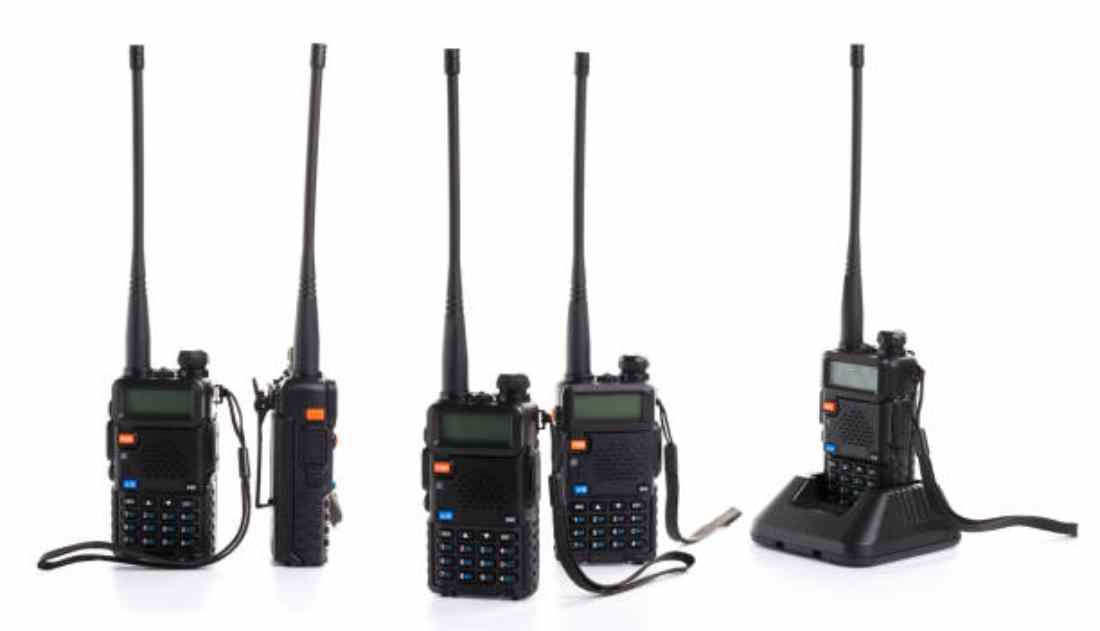
“Can you hear me now?” isn’t a business strategy.
It starts with a dropped call. Then a missed update.
Next thing you know, a delivery’s off route, the crew’s waiting at the wrong entrance, and your entire operation is chasing ghosts.
Welcome to life without reliable communication.
Wide-area businesses—trucking fleets, construction crews, security teams, utility contractors—don’t have time for spotty signals or app-based chaos. You need clear, instant contact no matter where the job takes you.
And that’s why the walkie talkie still runs the show.
Push. Talk. Done.
No swiping. No ringing. No “Your call cannot be completed.”
Just press a button and speak.
This is the magic of push-to-talk (PTT)—a feature so simple it’s easy to forget how powerful it is. Especially when you’re:
- Standing on scaffolding 50 feet in the air
- Driving a truck through a no-service zone
- Coordinating security across a 200-acre venue
You don’t need a call tree. You need a lifeline.
Coverage That Laughs at Dead Zones
Rural warehouse? Underground facility? Middle of nowhere?
No problem.
Unlike cell phones, walkie talkies with wide-area capabilities operate on robust networks designed to prioritize voice communication over long distances. We’re talking nationwide range, without depending on a single cell tower that panics during a thunderstorm.
You stay connected whether you’re managing:
- Cross-country logistics
- Multi-location job sites
- Remote field operations
And if you’re tired of “can’t get through” moments in your line of work? This is your way out.
Talk to One—or Everyone
Phone calls are a one-to-one affair. Great for ordering pizza.
Terrible for getting a 10-person crew on the same page in real time.
With walkie talkies, group communication is baked in:
- Assign channels by department or team
- Broadcast updates to everyone at once
- Handle emergencies without toggling through contacts
This isn’t about convenience. It’s about coordination at scale.
And when things go sideways (they always do), the ability to reach your entire team in a single sentence? Game changer.
Built for Work, Not Screen Time
Let’s face it—phones are delicate. Drop one from a forklift and it becomes a $900 paperweight.
Walkie talkies are made for messy, demanding, real-world jobs:
- Dustproof, waterproof, and drop-tested
- Loud speakers that cut through engine noise
- Batteries that go 12+ hours without begging for a charge
You don’t need Instagram. You need gear that works in the rain.
Lower Costs. Fewer Headaches.
Cell phones are expensive. And the monthly bills? Let’s not even.
Walkie talkies give you unlimited voice communication, no per-minute fees, and no “Sorry, I hit my data cap” excuses. Just consistent, budget-friendly tools that keep your team connected.
Add in fewer broken screens, less downtime, and simpler training—and it starts to look like common sense.
No Apps. No Distractions. Just Results.
Walkie talkies don’t ping. They don’t autoplay videos.
They won’t let someone check social media while they’re supposed to be checking inventory.
This stripped-down focus makes them perfect for safety-critical jobs, where distraction isn’t just annoying—it’s dangerous.
Want a device that doesn’t argue, scroll, or crash?
Here you go.
Bottom Line: Communication That Doesn’t Flake Out
If your business spans miles, you can’t afford communication that’s “pretty good most of the time.”
You need fast, simple, wide-reaching voice transmission that works when your team needs it most.
That’s exactly what walkie talkies deliver.
Because when your team’s scattered across cities—or counties—you don’t want to be the one yelling into the void.
